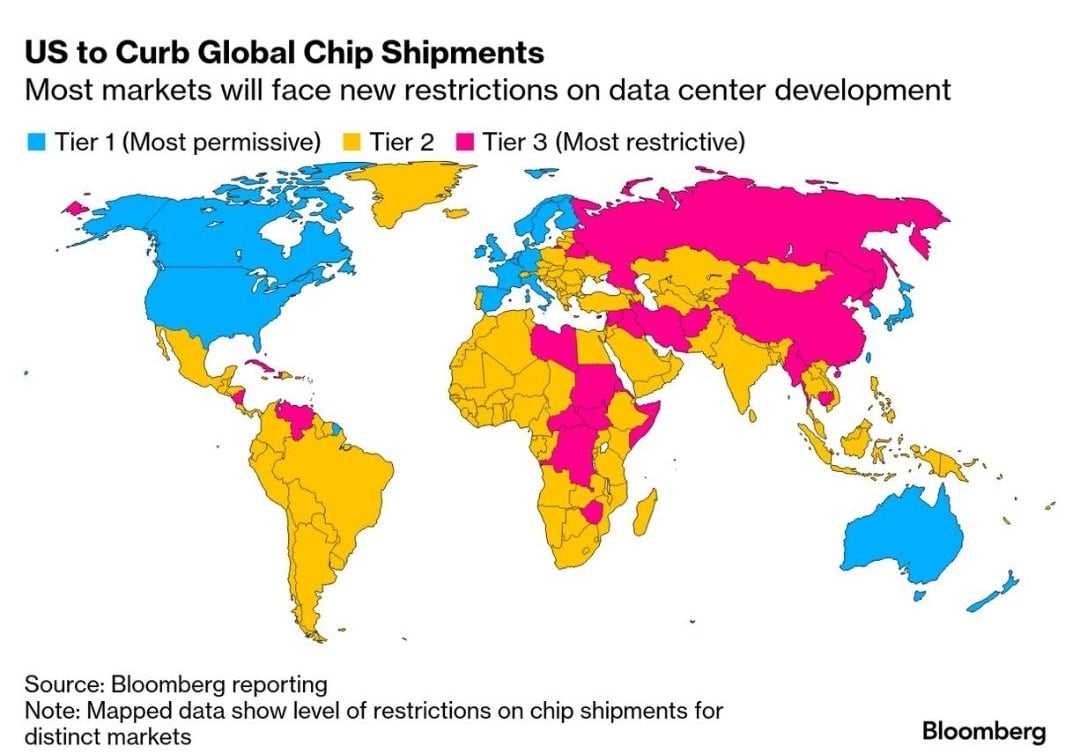
The recent decision by the Biden administration to limit the export of advanced AI computing chips to a select group of 18 countries has stirred heated debates. Some nations are quietly sulking, while others—Poland, the Baltic States, Israel, and Lithuania among them—are loudly asking, “Hey, aren’t we supposed to be best friends with the U.S.?”
Breaking Down the Categories
Countries are split into three categories:
- Category One: No restrictions. Ultimate BFFs – trusted partners.
- Category Three: Total restrictions. Enemies or not-so-friendly states.
- Category Two: The grey area. Chips can be exported, but not all, and there are strings attached.
It’s Not About Friendship—It’s About Trust
At its core, this decision is about two things: the goal and trust. The goal: “The United States must act decisively to lead this transition by ensuring that U.S. technology undergirds global AI use and that adversaries cannot easily abuse advanced AI.”
The countries on the list weren’t chosen just because they’re allies but because they also have “robust technology protection regimes and technology ecosystems aligned with the national security and foreign policy interests of the United States.” Translation: these countries have airtight systems to keep sensitive tech safe.
Looking in the Mirror
If your country isn’t on the BFF list, it’s time for some self-reflection. This isn’t just about being buddies with the U.S. – it’s about proving that your house is in order when it comes to protecting cutting-edge tech. Are your cybersecurity measures top-notch? Do your laws and policies align with what the U.S. sees as secure?
For those of us in countries feeling left out, it’s also a wake-up call. If we want to make it into the inner circle, we need to push our governments to step up and tighten their tech security. With the right moves, the next BFF list might just have more names on it.